It also increased the Cash Reserve Ratio
by 250 basis points from 20 per cent to 22.5 per cent, while retaining
the liquidity ratio at the rate of 30 per cent.
However, the committee narrowed the asymmetric corridor from +200 and -700 basis points to +200 and -500 basis points.
The MPR is the anchor rate at which the
CBN, in performing its role as lender of last resort, lends to Deposit
Money Banks to boost liquidity in the banking system.
By this increase of 100 basis points in
the MPR, the cost of funds to the banking system from the central bank
will now increase, thus leading to a rise in lending rate from
commercial banks to businesses.
Addressing journalists shortly after the
two-day MPC meeting held at the central bank headquarters in Abuja, the
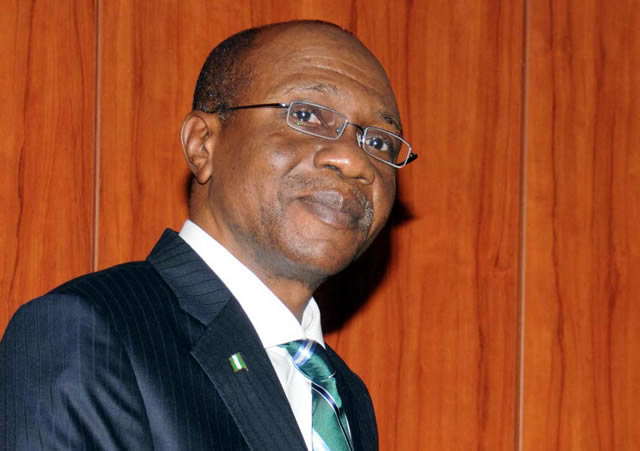
CBN Governor, Mr. Godwin Emefiele, said the committee expressed concern
that the excess liquidity in the banking system was contributing to the
current pressure in the foreign exchange market.
This, according to him, has a negative
impact on consumer prices, with the inflation rate rising to its highest
level in three years at 11.38 per cent.
The governor said at 11.38 per cent, the
inflation rate had breached the CBN’s policy reference band of six per
cent to nine per cent.
He lamented that previous efforts to
reflate the economy in order to spur growth had not elicited the
required response from the DMBs as there had been a resurgence in
liquidity in the interbank market.
Emefiele said, “The committee, in its
assessment of relevant internal and external indices, came to the
conclusion that the balance of risks is tilted against price stability.
The MPC, therefore, voted to tighten the stance of the monetary policy.
One member voted to retain the CRR at 20 per cent, while another member
voted to retain the current width of the asymmetric corridor.”
Concerned about the need for low
interest rates to support growth and employment, the governor said the
committee urged the CBN to explore innovative ways of ensuring
unhindered flow of credit at low cost to key growth sectors.
The CBN governor stated that despite the
accommodative monetary policy stance embarked upon by the apex bank
since July 2015 by lowering the CRR and MPR to free up more funds, banks
had yet to access these funds.
He said, “The bank (CBN) had adopted
accommodative monetary policy since July 2015 in the hope of addressing
growth concerns in the economy, effectively freeing up more funds for
the DMBs by lowering both the CRR and MPR, with excess liquidity arising
from the lower CRR warehoused at the CBN.
“The DMBs were to access these funds by
submitting verifiable investment proposals in the real sector of the
economy. The funds have not impacted the market yet because the CBN is
still processing some of the proposals submitted by the DMBs.
“In the first episode of easing, which
resulted in injecting liquidity into the banking system, the DMBs did
not grant credit as envisaged.
“The cautious approach to lending by the
banking system underpinned by a strict regulatory regime conditioned by
the Basel Committee in the post global financial crisis era has further
alienated investors from access to credit as banks prefer to build
liquidity profiles in anticipation of government borrowing.”
He also said, “The delay in the passage
of the 2016 budget has further accentuated the difficult financial
condition of economic agents as output continues to decline due to low
investment arising from weak demand.”
The governor said the sluggish growth in output was partly attributable to certain fiscal uncertainties.
This, he noted, had inadvertently
hampered investment spending and flows as well as led to slow growth in
credit to the private sector in preference to high credit growth to the
public sector.
He lamented that the challenges facing
the economy were part of the reasons why businesses were currently
finding it difficult to service their loan obligations to banks.
The development, according to him, has
led to the resurgence of non-performing loan portfolio, with the banking
sector recording about five per cent NPLs as against the three per cent
recorded few months back.
Emefiele said the committee of governors
would be meeting with the affected banks to discuss the type of loans
that had been granted that led to the rising NPLs, with a view to
reducing them.
The governor also denied claims that the
CBN planned to convert the $20bn in bank customers’ domiciliary
accounts into naira, stating that such had never been considered by the
apex bank.
He said, “There are customers who have
$20bn in domiciliary accounts and I want to use this opportunity to say
that those funds are not idle contrary to what was made people to
believe. Those funds on the balance sheet are funding certain assets on
the other side of the balance sheet. The $20bn is a liability on the
balance sheet and so, there is nothing like it being idle.
“I need to reiterate the fact that there
is no intention and there will never be that intention. It is not
within our view to begin to start to convert people’s domiciliary
account balance and I wish to say that this should be taken very
seriously.”
When asked why the apex bank had yet to
harmonise its foreign exchange policy, the governor said this would be
done after officials of the bank had met all the relevant stakeholders
in the financial system.
Emefiele stated, “The issue is to
improve the foreign exchange supply in the foreign exchange market. The
price of crude oil is improving and we hope to improve on the supply.”
Financial and economic experts, in
separate interviews with one of our correspondents, said that the
latest move by the MPC would further slow the growth of the economy.
The Managing Director and Chief
Executive Officer, Financial Derivatives Company Limited, Mr. Bismarck
Rewane, said, “I think it is a move in the right direction. But it
doesn’t address the absence of an exchange rate policy. It addresses
inflationary fears, but it doesn’t address the exchange rate policy. So,
I think there is still more action expected.”
“There is some wiggle room. The story is
credible. It is clear. But the absence of an exchange rate policy makes
the story slightly inconsistent,” Rewane added.
The Chief Executive Officer, Cowry Asset
Management Limited, Mr. Johnson Chukwu, said the MPC was faced with
declining growth rate and increasing inflation rate, adding that the
decision would not resolve the issue of rising inflation.
He stated, “The increase in inflation
rate is not driven by banking system liquidity or credit expansion. So,
increasing the CRR and MPR will not reduce inflationary pressure.
Inflationary pressure is coming from the price of petroleum products,
increase in electricity tariff and then the pass-through effect of the
increased exchange rate at the parallel market.
”
The Head, Research and Investment
Advisory, Sterling Capital, Mr. Sewa Wusu said, “Raising the interest
rate will mean that even if banks were to lend, it will be at higher
rates, and that will stifle investment. I think this policy is somehow
counter-productive.
The Head of Investment Research,
Afrinvest West Africa Limited, Mr. Ayodeji Ebo, said Afrinvest Research
had projected an increase in the MPR to 12 per cent in its 2016 outlook,
adding, “But we are particularly surprised that the MPC would be taking
the tightening course this early into its easing mode.”
Ebo said the suggestion that increase in
banking system liquidity was fundamentally driving the pressure on
exchange rate was not also subject to fact as “we have continued to see
high subscription at CBN interbank auctions despite intermittent OMO
(open market operation) mop-ups conducted, and exchange rate certainty
plays as much impact on foreign capital inflows as interest rate
competitiveness, and the current tightening is too mild to compensate
for the exchange rate risk.”

No comments:
Post a Comment